
Description
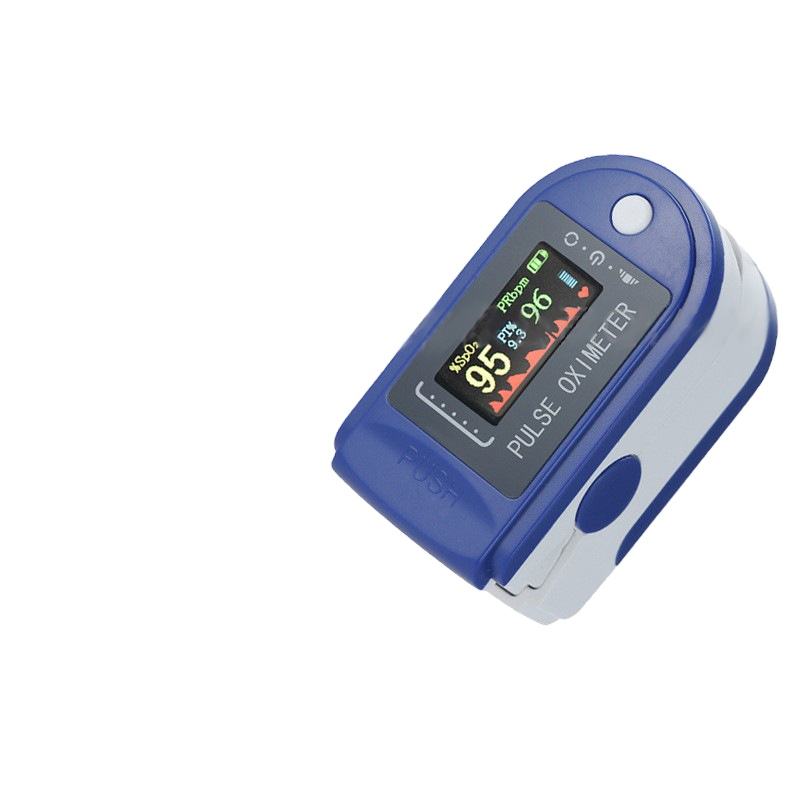
The colour OLED display shows:
- SpO₂ (blood oxygen saturation)
- Pulse waveform
- Heart rate
- Pulse bar graph
- Battery level
The display can be viewed in 4 different orientations for easier reading.
An automatic power-off function switches the device off when no finger is detected, helping to extend battery life.
Supplied with: 2 AAA batteries and a lanyard.
Suitable for: Adults and children
Measurement and Display:
- Blood oxygen saturation (SpO₂): 70%–99%
- Pulse rate: 30–250 BPM
Accuracy:
- SpO₂: ±2%
- Pulse rate: ±2%
Precautions for Use
- Do not use the pulse oximeter in MRI or CT environments.
- Do not use the pulse oximeter in situations where alarm monitoring is required. This device is not equipped with an alarm.
- Do not use the pulse oximeter in an explosive atmosphere.
- The pulse oximeter is intended only as an aid in assessing a patient’s condition. It should be used in conjunction with other methods of evaluating clinical signs and symptoms.
- Frequently check the sensor application site to ensure correct positioning and to assess the patient’s circulation and skin sensitivity.
- The pulse oximeter is not equipped with a SpO₂ alarm and is not intended for continuous monitoring.
- During prolonged use, or depending on the patient’s condition, it may be necessary to periodically reposition the sensor. Change the sensor position and check skin condition, circulation and correct alignment at least every 4 hours.
- Inaccurate measurements may result from autoclave sterilization, ethylene oxide sterilization or immersion of the sensors in liquid.
- Inaccurate readings may occur in the presence of significant levels of dysfunctional haemoglobin, such as carboxyhaemoglobin or methaemoglobin.
- Intravascular dyes such as indocyanine green or methylene blue may affect measurement accuracy.
- Excessive patient movement may cause inaccurate readings.
- Strong ambient light may interfere with SpO₂ measurements. Shield the sensor area from excessive light if necessary.
- Electrosurgical equipment may interfere with measurements and cause inaccurate readings.
- Venous pulsations may result in inaccurate readings.
- Inaccurate readings may occur if the sensor is placed on an extremity fitted with a blood pressure cuff, vascular catheter or intravascular line.
- Measurements may be inaccurate in patients with hypotension, severe vasoconstriction, severe anaemia or hypothermia.
- Measurements may be inaccurate in patients experiencing cardiac arrest or shock.
- Nail polish or artificial nails may interfere with SpO₂ readings.
Instructions for Use
- Insert two AAA batteries into the battery compartment, ensuring correct polarity, then close the cover.
- Press the finger clip to open the device. The fingernail should face upwards.
- Insert a finger fully into the rubber opening of the pulse oximeter before releasing the clip.
- Press the power button on the front panel once.
- Read the measurement results on the display.
- The pulse oximeter automatically switches off approximately 5 seconds after the finger is removed.
Cleaning
Use medical-grade alcohol to clean the rubber surface inside the pulse oximeter that comes into contact with the finger.
Clean the finger to be tested with alcohol before and after each measurement.
Reviews
There are no reviews yet.